Retail UX · Contract · 2022–2024
Promotion Path to Purchase
Redesigning the promotion experience on the Home Depot Canada app: surfacing offers earlier, clarifying eligibility, and removing friction from the path to checkout.
Year
2022–2024
Role
Product Designer (Contract)
Client
Home Depot Canada
Scope
Mobile App · Checkout Experience · Retail UX
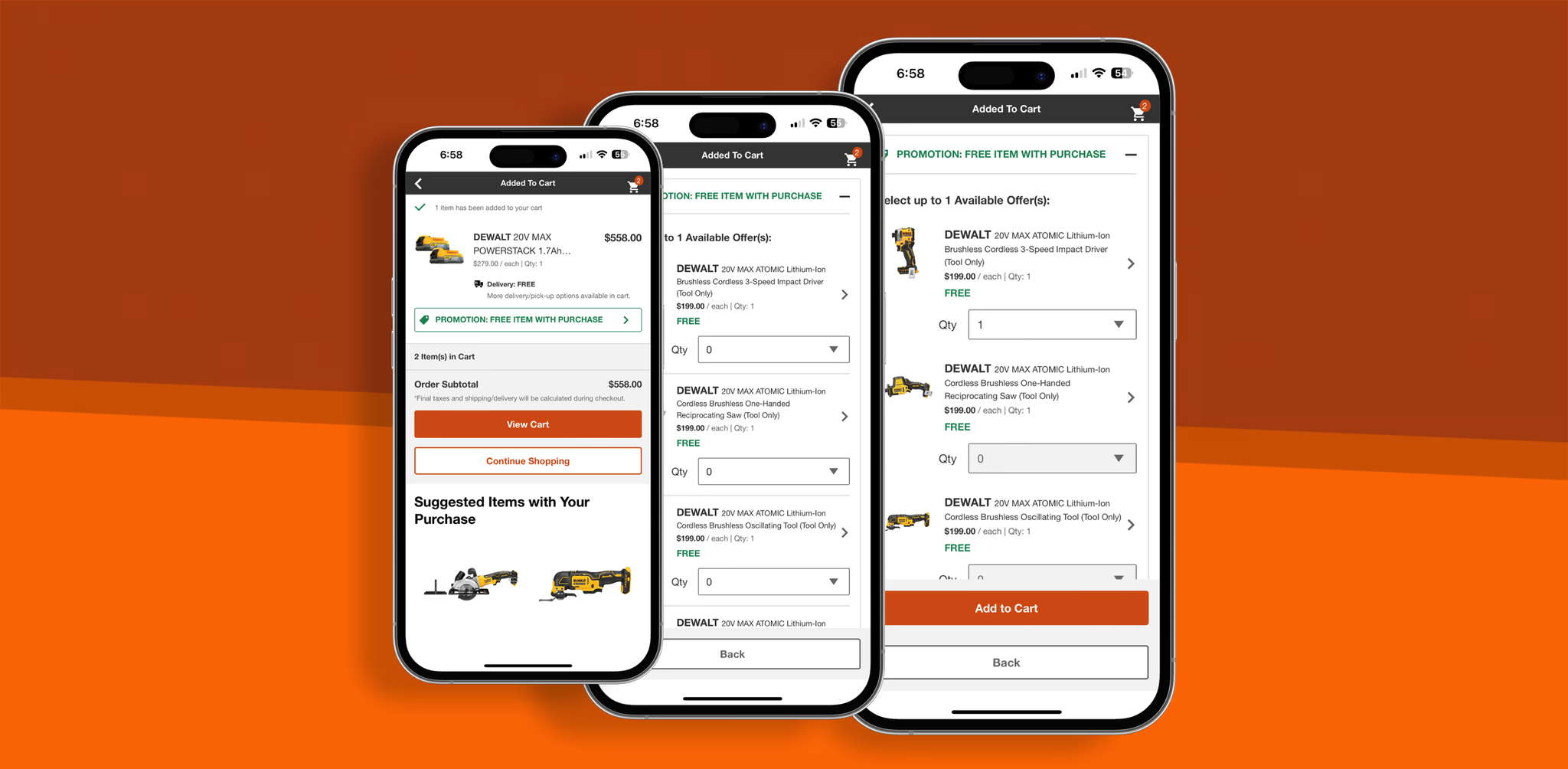
What is the Promotion Experience?
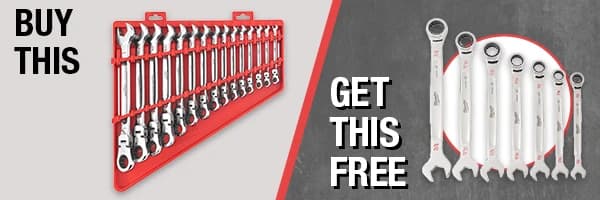
Customers are presented with promotions tied to specific purchase criteria. Qualifying purchases unlock additional products at no extra cost. This takes two primary forms: a set quantity of items purchased resulting in complimentary products, or the ability to choose free items from a curated selection.
Well-executed promotions deliver tangible value to customers while driving sales and brand loyalty. The challenge isn’t the offer itself. It’s ensuring users discover, understand, and successfully act on it before they leave.
Tags
Process
- Promotion flow mapping
- User journey research
- Crazy 4s ideation
- Edge case exploration
- Hi-fidelity prototyping

Challenges & Solutions
Problem
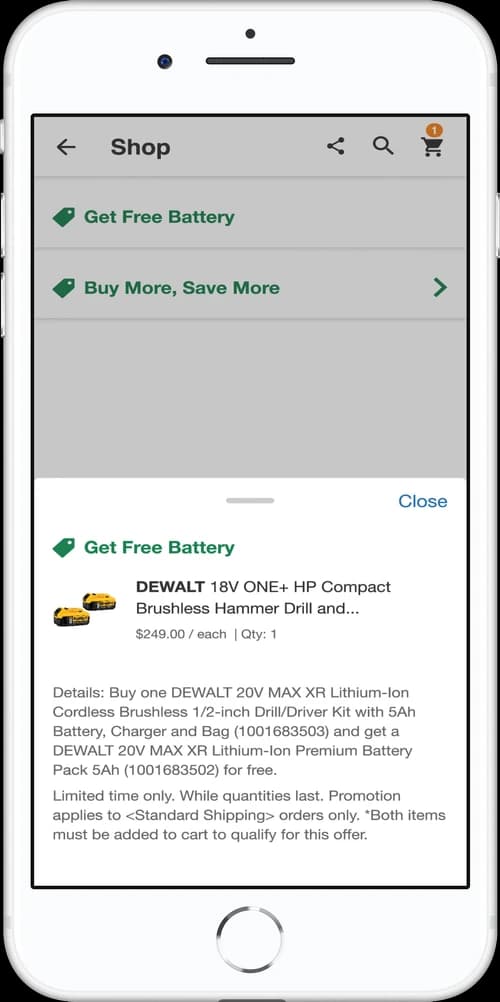
Promotions weren't visible
Users had to navigate through multiple steps to discover applicable promotions. There was no clear surface-level signal that a qualifying offer existed, leaving real value unclaimed at scale.
Solution
Prominent promotion surfaces
We redesigned the promotion UI to surface personalised offers earlier, integrating contextual callouts on product pages so promotions were discoverable before users reached checkout.
Problem
Rules were unclear
Complex promotion terms weren't communicated at the right moment. Users encountered eligibility conditions mid-checkout, creating confusion about whether they qualified and what they needed to do next.
Solution
Clear instructions and real-time feedback
Each promotion was accompanied by plain-language eligibility criteria and live progress indicators. Users could see exactly what they needed to qualify, with no surprises at checkout.
Problem
Applying promotions felt broken
The promotion application flow during checkout was non-intuitive. Users frequently abandoned the process, unsure whether a promotion had applied or which step they'd missed.
Solution
Trust-first framing
Avoiding aggressive or manipulative promotion mechanics was a deliberate priority. The goal was sustained trust and repeat engagement, not one-off conversion at the cost of the relationship.
Design Question
How might we create a seamless experience for customers who want to take advantage of promotions on the app?
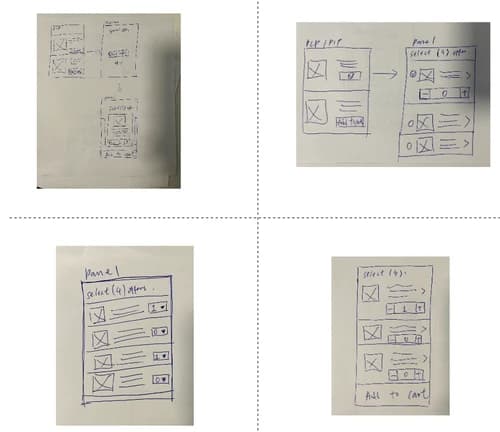
Ideation: Crazy 4s
A Crazy 4s exercise helped map the design flow clearly and generate four distinct modal approaches in a short window. Research reinforced that timely promotion reminders meaningfully improve the shopping experience, so building visibility without being intrusive became a core constraint. Avoiding aggressive patterns was a deliberate principle from day one.
Edge Cases
Defining edge cases early shaped the overall system. The scenarios below represent the states most likely to break the experience, along with the design decisions made to handle them gracefully.
Multiple promotions
When a customer qualifies for more than one offer simultaneously, the interface surfaces all eligible promotions with clear hierarchy, helping users make informed choices without overwhelm.
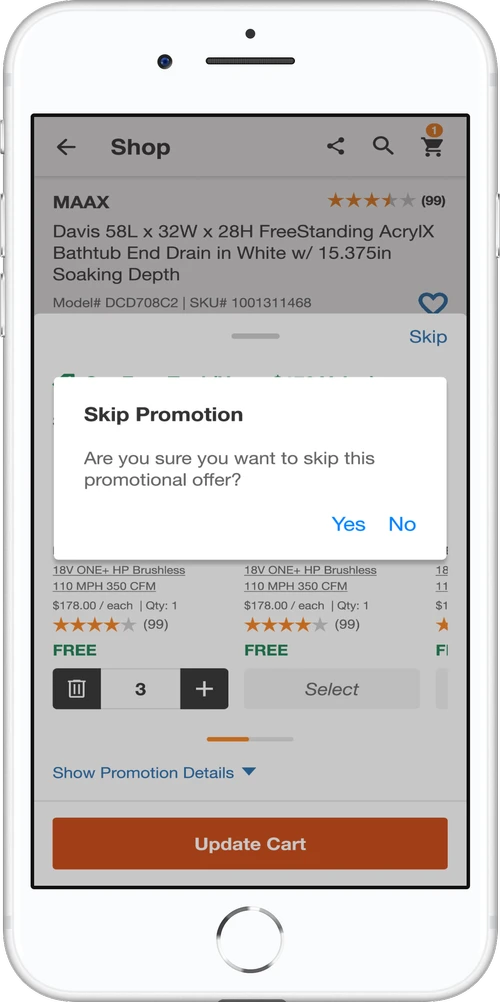
Skip promotions
When a customer wants to proceed without adding promotional items, the flow provides a clear, friction-free exit, respecting their intent without burying the option.
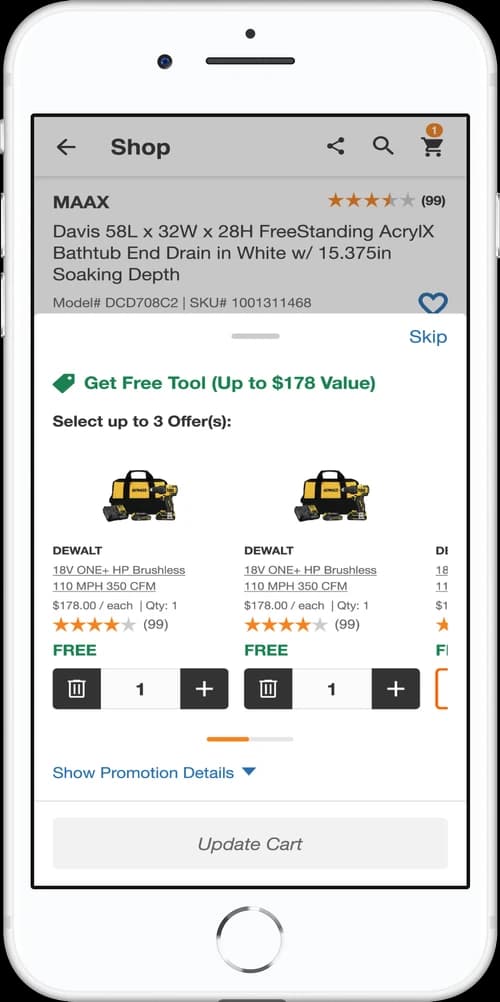
Update promotions
When a customer's cart changes and a promotion is affected, the system communicates the impact clearly, allowing users to adjust their selection without losing context.
Hi-Fidelity Prototype
The final prototype brought together all three promotion states (entry, selection, and confirmation) into a single cohesive flow. The interactive demo above demonstrates the end-to-end experience, from promotion discovery through to seamless checkout completion.
Key Learnings
Maintaining consistency across platforms requires more than visual alignment. It demands shared vocabulary and coordinated decision-making across the full team.
Working within a cross-functional team underscored how much design momentum depends on clear communication. Alignment isn't a byproduct; it's the work.
Designing for edge cases isn't just about coverage. It's about building a system users can trust when things don't go as expected.
Next project
Aequify
Fintech platform · 2022–2023